
Working title: bior-shruth old bed of a river’s former course Gaelic
pronounced as beer-shrooh
Bior‑shruth (working title) is an album that weaves a river’s relentless flow with the layered, migrating memories of my Gaelic‑speaking great‑grandparents, tracing how language, land and lineage move, fade and resurface across six generations.
When I stumbled across the term bior-shruth in Robert Macfarlane’s book Landmarks, it immediately drew together what I was wanting this next album to explore- rivers + tape, flow + velocity, memory + record.
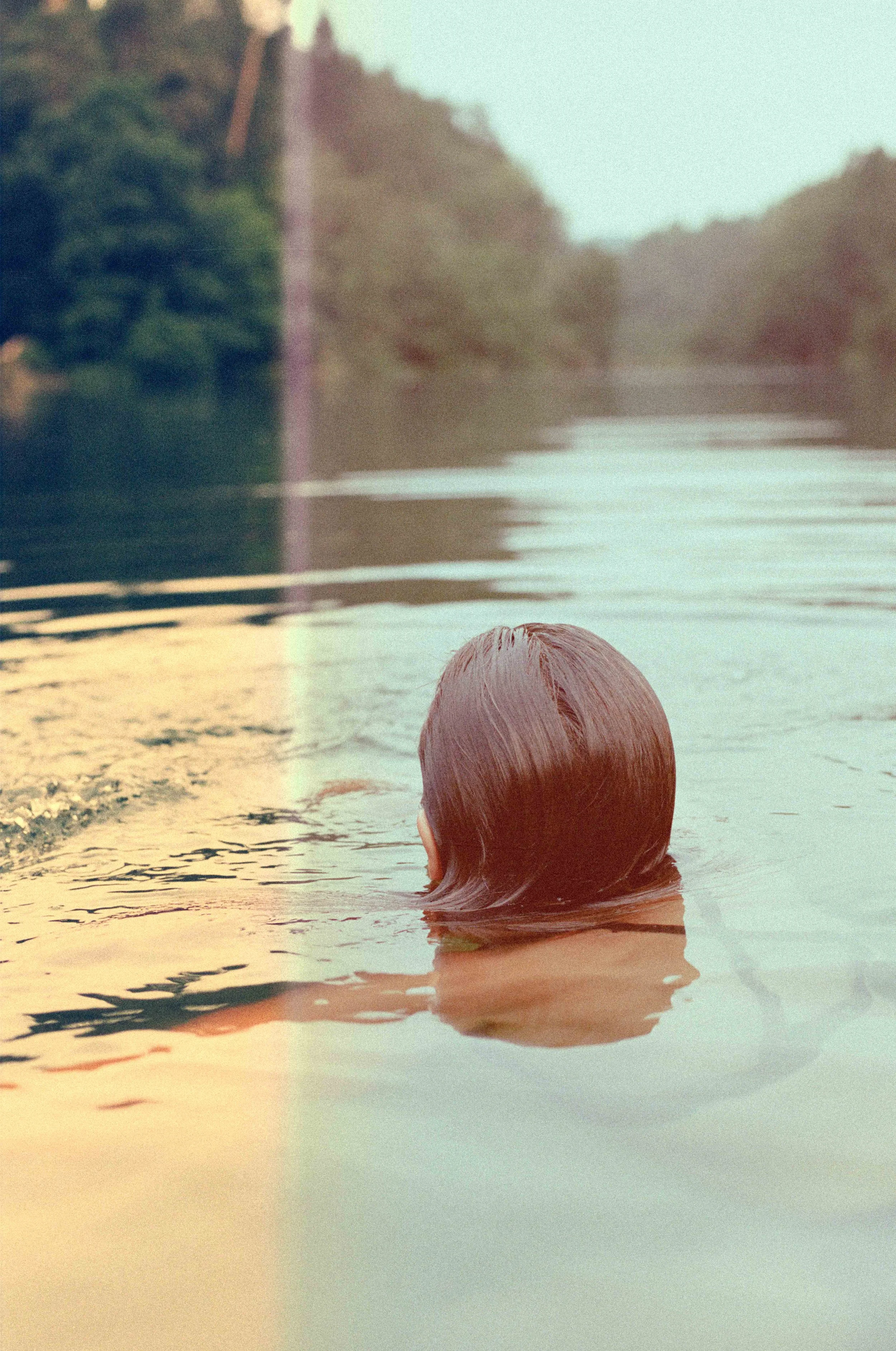
I climb into the flowing river and think of the tape moving on my reel-to-reel machine, a set rate that ebbs and flows to its own rhythm and disturbances, over rocks or machine heads, around curves, corners & magnets. Open a reel of tape and let it fall, and it’s like water pouring from a tipped vessel. And the idea of memory, whether recorded on tape as artefact or held in the molecules of moving water, both documenting a journey.
I cut lengths of tape to create loops, then cover the erase head on my reel-to-reel machine so I can layer sound-on-sound. I can then make a layered bed of sound building a mixture of field recordings, analogue synths, piano and voice. Through this process I keep homing back to my local river and its ecosystem and dwelling in the layers of silt, sand and mud, the tree roots and mycelium giving way to the birds, trees, bats and fish.
Back in the autumn I went on a bat walk with local ecologist Ivi Szaboova where we used bat detectors to listen to their echolocation at dusk. On first hearing their rapid percussive rhythm, pitched down to an audible frequency for the human ear by the detectors, I knew I wanted to make music with these extraordinary sounds. The more I learned about bats- their relationship to water and its importance in their foraging and navigation, and their relationship to one another, the grandmothers being the teachers of the young, the way mothers carry their unborn bats until they’re almost a third of their bodyweight, the more I became fascinated and the more I felt the pull in understanding my own story through these, less-told-of, mammals.
When I heard that they travel to maternity roosts from where I live in Stroud, to where my great-grandmother came from, across the Severn river in the Forest of Dean, I couldn’t resist linking the Bat’s migration across the wide expanse of the Severn estuary to my own great-great grandmothers migrations from Skye to Punjab and great-grandmother from the Forest of Dean to Kenya. The river and its ecosystem began gently disrupting a pattern. A pattern of the way our family stories around migration had been told, for the most part, centered around patriarchal jobs, war and colonialism. And whilst this story exists, it’s not the whole story, and I became fascinated by those of the women in our family, the great grandmothers I never met and the extraordinary things that happened to them, the journeys they made and the water around them. Quickly the soundbeds I was creating on tape from the field recordings of the river, led to songs emerging on the album about these women- Isabella, Dorothy, Meg, my Mum Fi, myself and my daughter Joy, spanning 6 generations.
There’s a line in the book ‘A Land’ by Jaquetta Hawkes where she describes Henry Moore finding the form within the stone. I gather sound and listen for forms, making a shape that seeks to tell a shared story.